Standing Water After Rain
Puddles that remain for an extended period often indicate low spots, compacted soil, poor grading, or an inadequate path for runoff.
Standing water may look like a temporary inconvenience, but repeated drainage problems can damage your lawn, landscape beds, hardscaping, and areas near your home. Learn what to watch for and when to call a professional.
Request a Drainage ConsultationA well-designed landscape should move rainwater away from vulnerable areas while allowing the soil to absorb moisture at a healthy rate. When water has nowhere to go, it can saturate soil, weaken turf, wash away mulch, expose roots, and collect near patios, walkways, or foundations.
Huntsville-area properties can experience heavy rainfall, sloped lots, compacted soil, low areas, and runoff from roofs or neighboring properties. Because every yard is different, the best drainage solution begins with understanding how water enters, crosses, and exits the site.
Puddles that remain for an extended period often indicate low spots, compacted soil, poor grading, or an inadequate path for runoff.
Constantly soft soil can make mowing difficult, create muddy foot traffic areas, and prevent homeowners from comfortably using portions of the yard.
Excess moisture can reduce oxygen around plant roots. Turf may thin out, develop bare patches, or struggle even when fertilization and routine care are consistent.
Small channels through a lawn or landscape bed show that water is moving too quickly across the property. Repeated runoff can expose roots and displace soil, gravel, or mulch.
Soil should generally encourage water to move away from the home. Persistent pooling near exterior walls, crawlspace openings, or basement areas should be evaluated promptly.
Standing water can create favorable mosquito habitat. Correcting the source of persistent pooling can help make the property more comfortable and usable.
Uncontrolled runoff can wash material away from beneath walkways, edging, patios, retaining features, and planting beds, resulting in movement or uneven surfaces.
A repeating pattern is one of the clearest signs that the issue is not simply an unusually wet day. The property may need a permanent drainage strategy.
There is no universal fix for every wet yard. A professional should consider slope, soil conditions, roof runoff, neighboring properties, utilities, landscape features, and the safest location for discharged water.
Correcting the slope of the lawn can guide surface water away from structures and low areas. Grading may be appropriate when the property lacks a clear drainage path.
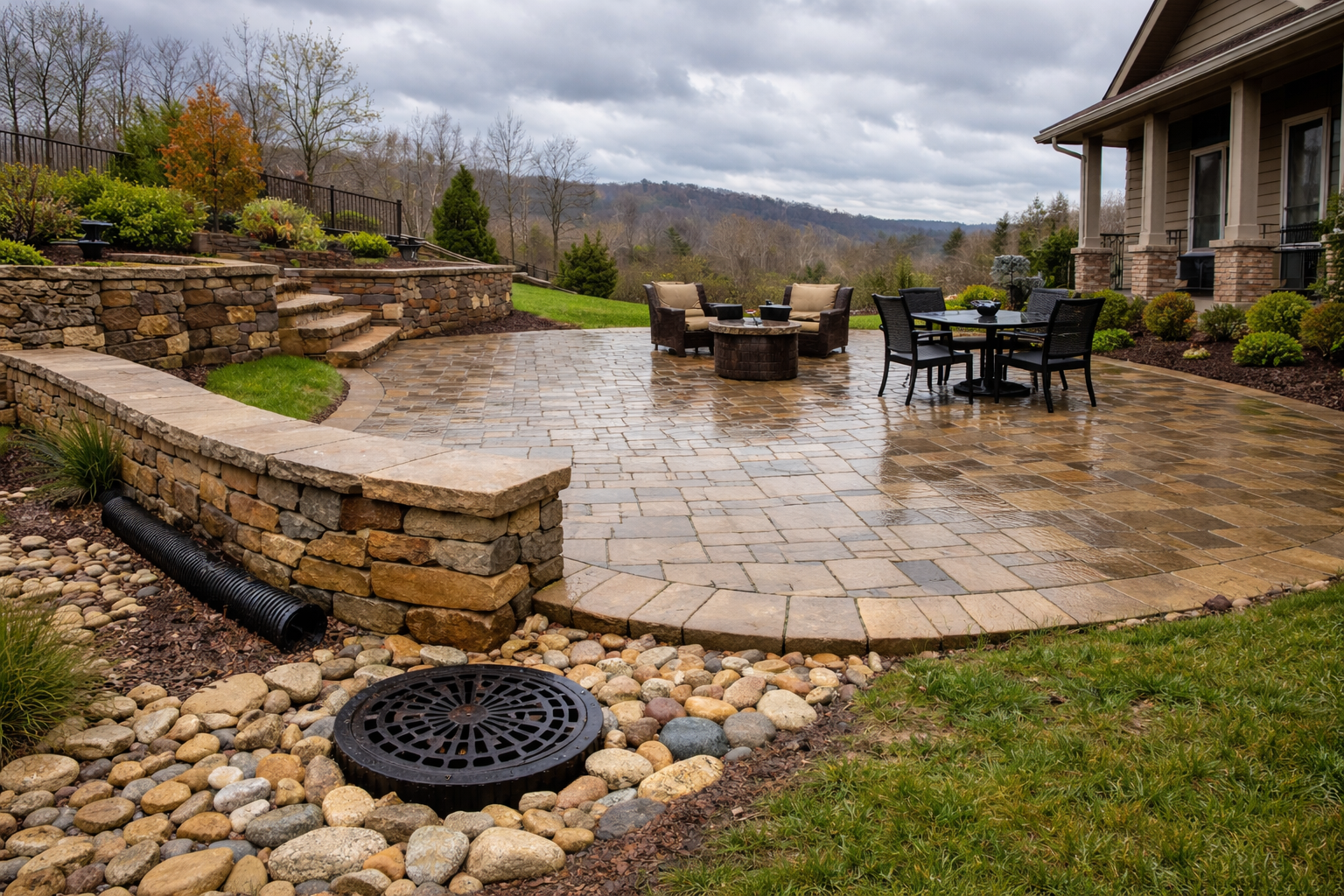
A French drain uses a gravel-filled trench and perforated pipe to collect and redirect subsurface water. It is often used for chronically soggy areas or water moving through the soil.
Catch basins collect surface runoff at low points and route it through solid pipe toward an appropriate outlet. They may help with concentrated runoff from lawns, downspouts, patios, or paved areas.
Water that remains well after surrounding areas have dried may indicate poor infiltration, compacted soil, improper grading, or a low spot that requires correction.
Sometimes minor surface corrections help, but adding soil without understanding the full drainage pattern can redirect water toward another problem area. The source and destination of the runoff should be considered first.
No. French drains are useful for certain subsurface water problems, but grading, catch basins, downspout extensions, swales, or a combined system may be more appropriate for other properties.
Schedule an evaluation when water repeatedly collects near the home, erosion is worsening, plants are declining, hardscape areas are shifting, or the same wet locations return after every significant rainfall.